For multi-generational family jewelers — the businesses run by the grandchildren and great-grandchildren of the founder, with sixty or eighty or a hundred years on the same Main Street — the conventional digital transformation playbook has produced fifteen years of frustration without changing the underlying business.
The advice was familiar. Better website. Better SEO. Better paid ads. Better social media. The investment was made. The traffic came. The relational core of the business — the part that has actually mattered for three generations — did not benefit, because the relational core lives in the owner, and the owner was not on the digital surface in any way that customers could recognize.
This piece is about what has changed in the last twelve months, why the new model finally aligns with what these businesses actually are, and what the practical path looks like for owners thinking about whether to make the shift.
What These Businesses Actually Are
The thing that gets missed in most consultant conversations with family jewelers is that the actual asset of the business is not the inventory or the location. It is the family.
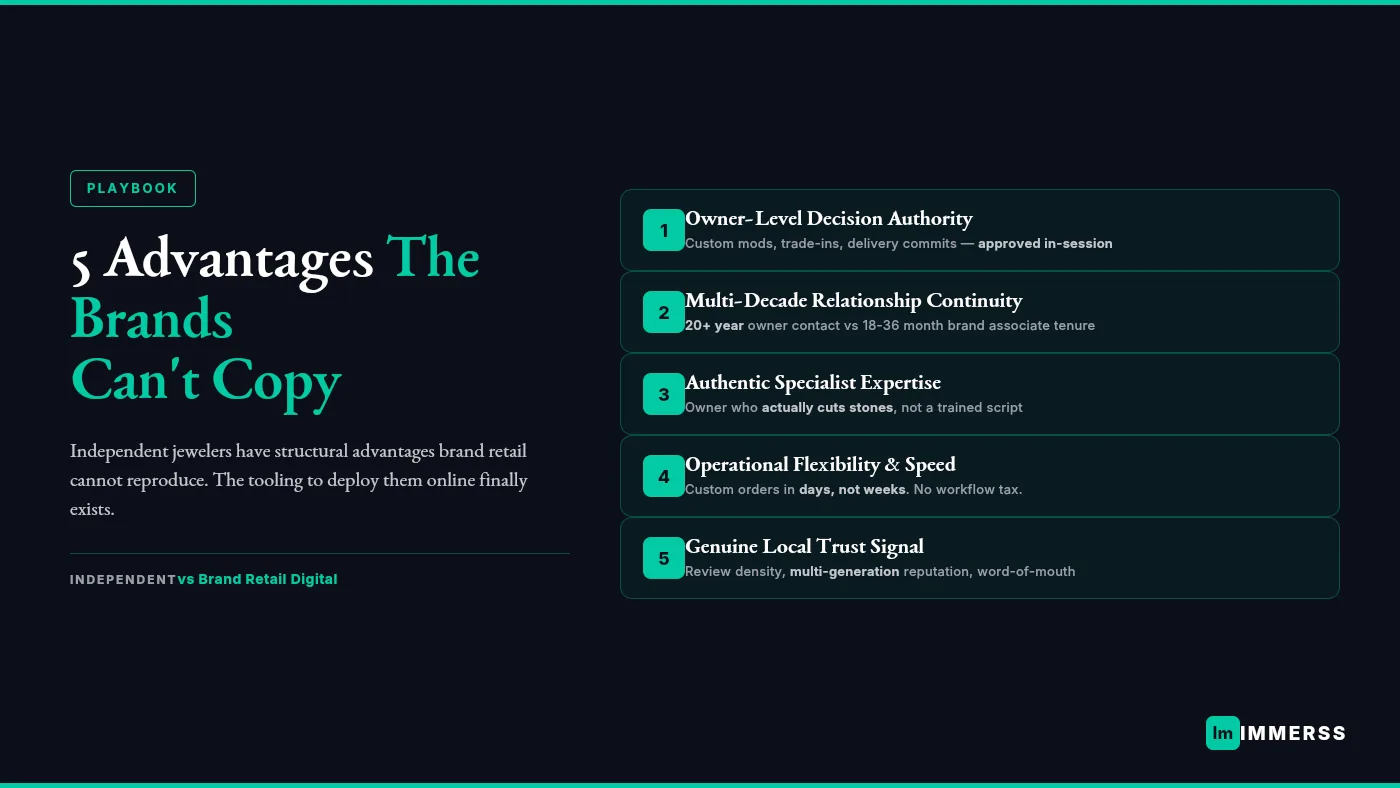
The owner — usually the second, third, or fourth generation — is the brand. They carry the institutional memory of the customer relationships. They hold the taste authority that determines what gets recommended and why. They put their family name on every transaction, which produces a quality of care that is structurally absent from corporate retail. They are the reason customers choose this jeweler over the more convenient or more aggressively priced alternatives.
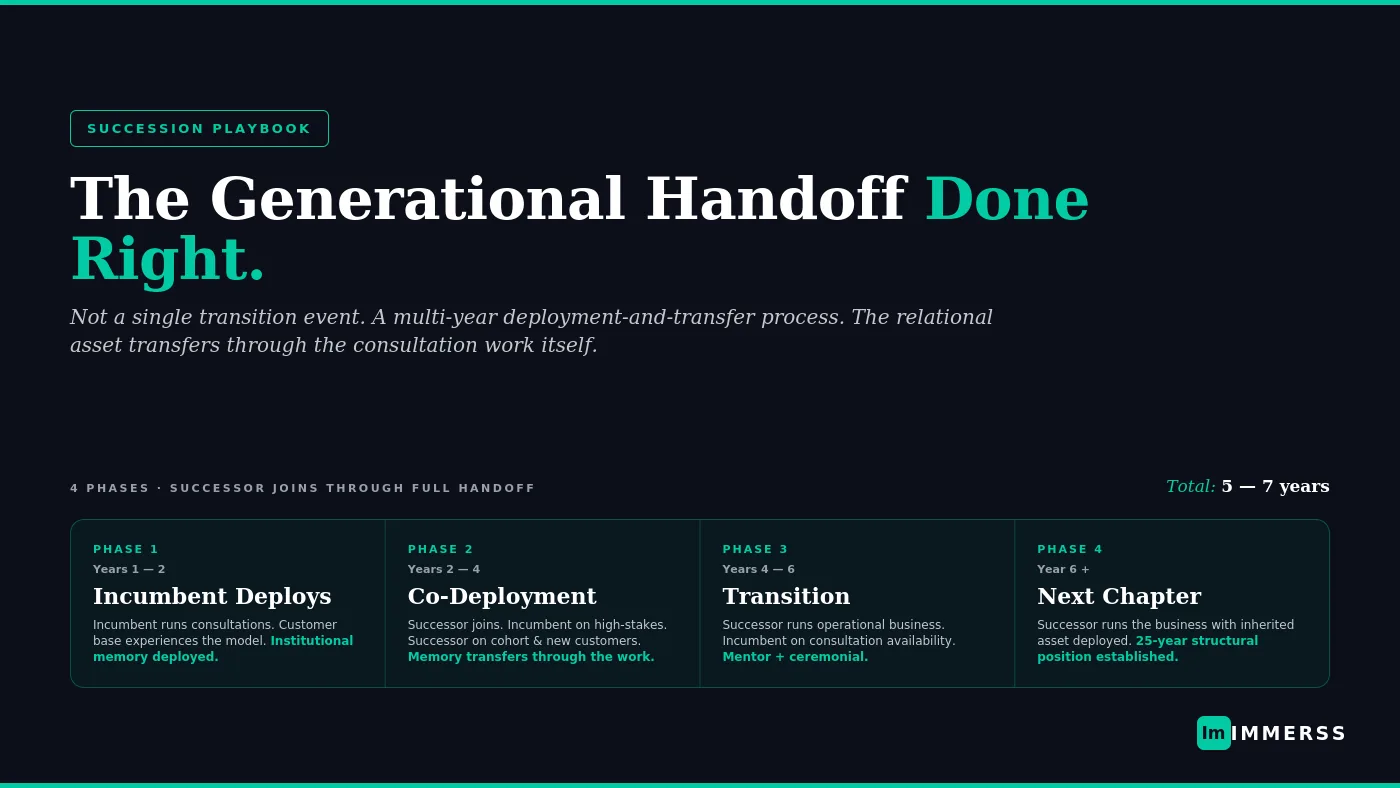
This relational asset compounds across generations. The grandfather built it from 1958 to 1991. The father maintained and extended it from 1991 to 2014. The current owner is now stewarding it, with the next generation in some stage of considering whether to take it on.
The digital era has been hard on this kind of business specifically because the conventional digital surface does not carry the asset. The website looks like every other jewelry website. The social media looks like every other store’s social media. The owner is reduced to a logo at the top of the page. New customers who arrive on the digital surface have no signal that this is a family business with sixty years in the community. They get treated like generic shoppers and they bounce, like generic shoppers do.
Why Conventional Digital Investment Has Underperformed
For these businesses, the digital metrics dashboard has been telling a misleading story for fifteen years.
The dashboard reports traffic, conversion rate, AOV, CAC, channel attribution. None of these metrics measure the relational equity that the family has built over three generations. The owner sees reports suggesting the business is underperforming online, when in fact the metrics are not measuring the part of the business that matters.
The standard response is to keep doubling down on what the conventional playbook recommends. Better photography. Better SEO. More aggressive ad spend. Newer configurator. The investment compounds. The relational asset does not benefit, because the relational asset is the owner themselves, and the owner is not on the digital surface.
After fifteen years of this, the result is a generation of family jewelers who have spent meaningful capital on digital infrastructure that does not work for their business model. Some have quietly accepted that the digital era is incompatible with what they do. Some are running the business out, with the implicit understanding that the eventual ending is consolidation or closure. Many are wondering, in the conversations they have with their adult children, whether the business has a future at all.
The Operational Shift That Has Become Possible
Three things have converged in the last twelve months that change the deployment math for family jewelers specifically.
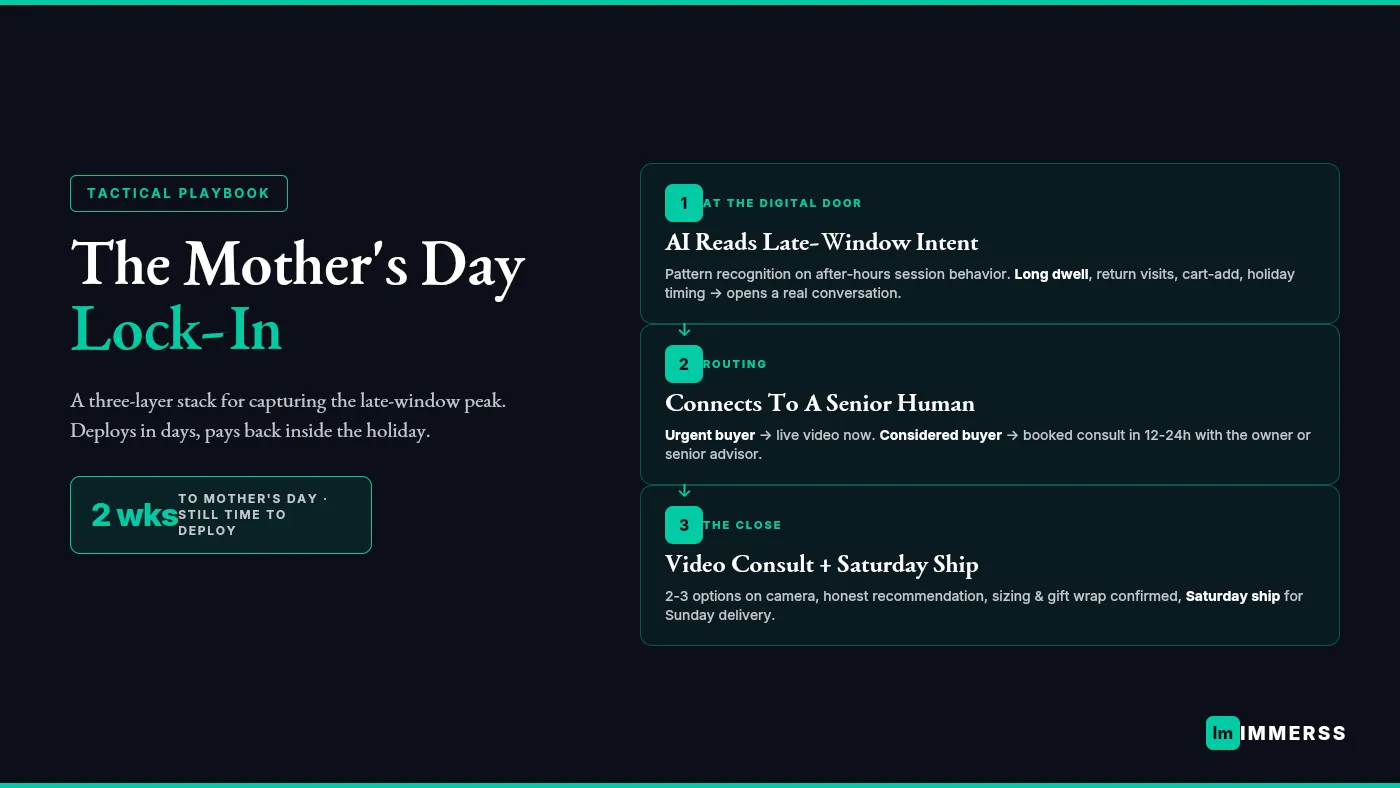
AI qualification on the storefront. A sales agent on the digital surface can now recognize high-intent customer patterns in session signals — extended dwell on engagement or anniversary categories, returning visits, comparison behavior, relationship-purchase indicators — and route those customers toward a scheduled consultation rather than letting them drift through the configurator.
Video consultation infrastructure that fits the owner’s reality. The consultation can be conducted from the back office of the store, with the owner on camera in their actual environment, with the inventory accessible behind them. This is operationally light enough that the owner does not need to relocate or invest in production setup. They show up, they talk to the customer, they conduct the consultation the way they would conduct an in-person conversation.
Conversation patterns that match in-store consultations. The structured video consultation runs the way an in-store conversation runs — relational opening, situated discovery, taste-led recommendation, decision and commitment. The customer leaves the call having had the same kind of experience an in-person walk-in would have had, with the same person whose name is on the door.
The combination of these three is the first model in fifteen years that puts the actual asset of the business — the owner — on the channel where new customers begin their journey.
What The Practical Deployment Looks Like
For a multi-generational family jeweler considering whether to make this shift, the deployment structure is more straightforward than the conventional digital transformation playbook suggested.
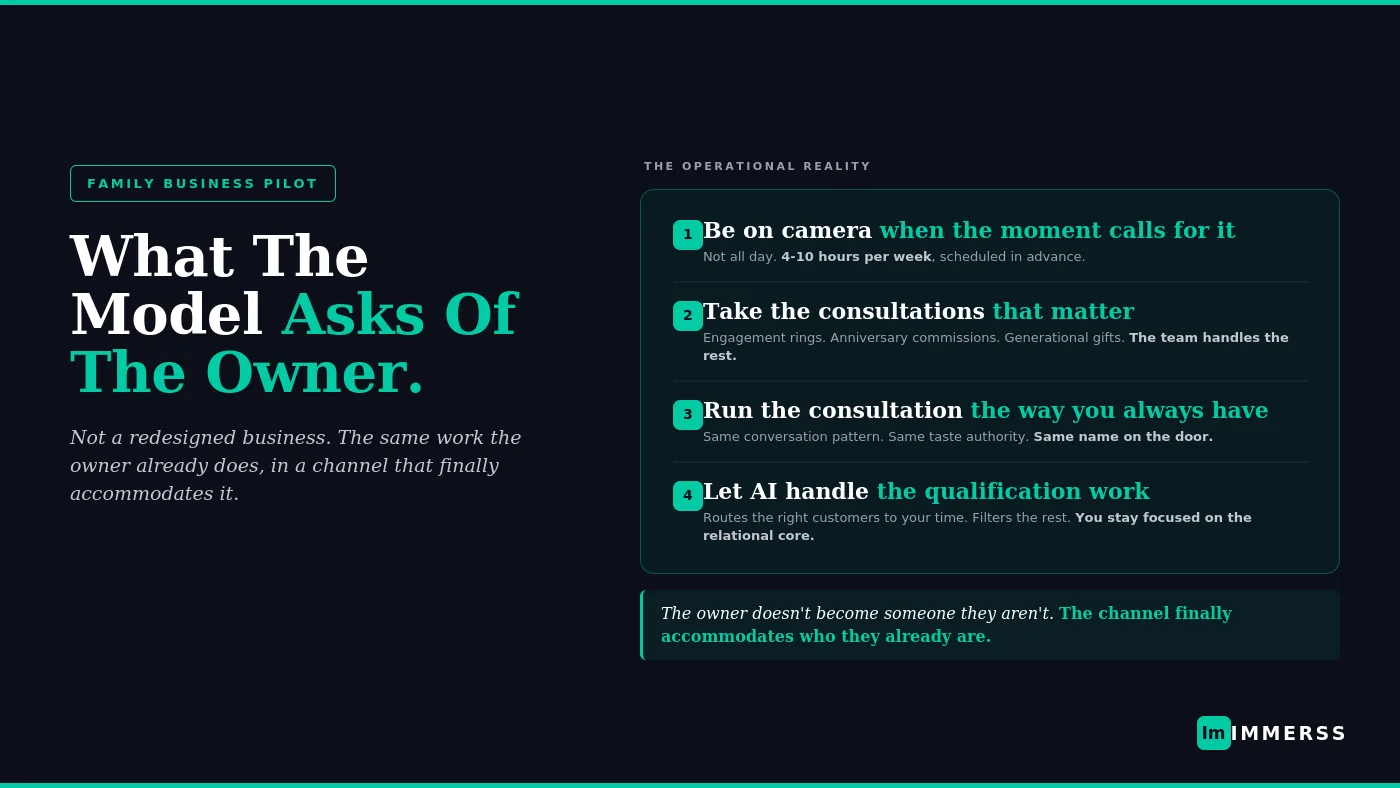
Senior staffing on the owner directly. The owner is the consultation lead for the relational core of the customer base. Engagement rings, anniversary commissions, generational gifts, high-AOV pieces, returning-family customers. The team handles transactional inquiries, follow-ups, support, sizing questions. The owner is on consultations that matter and on no consultations that do not.
AI calibrated to recognize the relational customer. Session signals that indicate relational-purchase intent route to scheduled consultation with the owner. Signals that indicate transactional intent route differently. The AI does the qualification work that the front-of-house staff does in-person, freeing the owner to focus on the consultations that justify their time.
Time commitment proportional to the asset. The owner does not need to be on camera all day. The owner needs to be available for a structured set of scheduled consultation slots — typically several per week — that capture the high-AOV customers who would otherwise be lost to the digital surface. For most family jewelers, this is between four and ten hours per week of camera time, scheduled in advance, with the rest of the owner’s day looking essentially like it always has.
Operational simplicity that respects the existing business. The deployment does not require redesigning the website, retraining the team, or reorganizing the operational rhythm of the store. The AI agent runs alongside the existing surface. The video consultations happen on the existing infrastructure. The owner shows up at the scheduled times. The transactions, when they close, settle through the existing systems.
This is the model. It is operationally clean. It does not ask the owner to become someone they are not. It asks the owner to do the same work they have always done, in a channel that finally accommodates it.
What The Pilot Looks Like For This Business
For family jewelers considering whether the model fits their specific business, a structured 60-day pilot is the cleanest way to find out without committing to broader infrastructure investment.
The pilot is, in this category specifically, less about the technology and more about the operational rhythm. Does the owner enjoy being on camera. Are the scheduled consultation slots feasible given the rest of the day. Do the customers who book consultations close at the rates that justify the owner’s time. Does the AI qualification routing surface the right customers and not the wrong ones.
These questions cannot be answered in the abstract. They get answered through running the deployment for sixty days, on the operator’s specific traffic, with their specific owner, against their specific customer base.
What the pilot retires:
- Whether the deployment fits the owner’s working style and time
- Whether the customer base responds to the owner-on-camera model
- Whether the close rate and AOV on consultations justify the time commitment
- Whether the AI qualification surfaces customers who actually convert
The pilot is fully managed. The owner provides the camera time and the brand context. Setup, integration, optimization, and ongoing support are handled by the Immerss team. There is no upfront cost. The pilot runs for 60 days. At the end, the operator has data to make a confident decision about scaling.
Who This Is For
The family jewelers for whom the model fits most cleanly share a few characteristics:
Multi-generational ownership. The asset of the business is the family — second, third, or fourth generation owners whose personal presence is the reason customers choose this jeweler.
An owner willing to be on camera. The model only works if the owner shows up on the consultations. Owners who are uncomfortable with video, or who feel their time is better used in non-customer-facing work, are not the right fit.
A meaningful share of revenue concentrated in relational categories. Engagement rings, anniversary commissions, generational gifts, returning family customers. If the business is mostly transactional inventory, the relational lever does not move the math.
A serious question about the next-generation transition. Owners who are wondering whether the business has a digital future, whether the next generation will want to take it over, whether the model needs to fundamentally change. This shift specifically addresses the structural question underneath those concerns.
If your business fits this profile, the structured pilot is a low-risk way to find out whether the model produces the lift on your specific traffic and your specific customer base.
What The Next Generation Inherits
There is a quieter consequence of this shift that deserves to be named.
For multi-generational family jewelers, the question of whether the business has a future has been hanging over the family conversations about succession for years. Did the next generation want to take it over. Could the next generation actually run it. Was there a viable digital path forward.
The owners running this model are reporting something they had not anticipated. The next generation is more interested in taking the business over than they had expected. The model is more compatible with the way younger family members want to work. The personal-authority asset that the older generation built is recognizable and inheritable in a way that the conventional digital advice had made it look like it was not.
The business gets to continue being the family business. The brand, which is the family, gets to continue being the family. The next generation inherits something they can recognize as worth inheriting.
This is the conversation worth having with the family jewelers I know who have been wondering whether to keep going. The answer, for many of them, is yes. The path through is the one that puts the owner back on the surface where the relationship begins, in the form the brand actually takes.
Immerss is a luxury live commerce platform combining AI sales agents with one-to-one video consultations, built for fine jewelry operators whose conversion advantage is conversational and relational, not technical.
Apply for the 60-day AI Sales Agent pilot: landing.immerss.live